
Doan Van Hau's Red Card, Doan Ngoc Tan's Injury, and the Availability Lesson of V.League Round 2
**Core answer**: Doan Van Hau received a straight red card in the 70th minute of Cong an Ha Noi's 1-0 V.League Round 2 win away at Hang Day, while The Cong Viettel lost midfielder Doan Ngoc Tan to a shin and ankle injury ahead of their AFC Champions League 2 fixture. Both events expose availability risk. **Key facts**: - Doan Van Hau was sent off in the 70th minute for a studs-to-shin challenge on August 2026 (match date per source). - Stefan Mauk scored the stoppage-time winner as Cong an Ha Noi won 1-0 while a man down. - Doan Ngoc Tan, former Thanh Hoa captain, is confirmed out for The Cong Viettel's AFC Champions League 2 match. - Ngoc Tan has suffered repeated serious injuries over the past year, raising a chronic availability concern. - Coach Velizar Popov called the red card entirely deserved and prioritised the injury over the defeat. **Source attribution**: Stage-1 and Stage-2 analysis of the V.League Round 2 incident report (Doan Ngoc Tan: Doan Van Hau apologises, says not intentional) | Cross-checked: VuaBong.vn **Related Q&A**: Q: How long could Doan Van Hau be suspended? A: The central expectation is the automatic one-match ban, with an extended suspension possible only if VFF classifies the challenge as serious foul play. Q: Why is Doan Ngoc Tan's injury so significant? A: His repeated injury history places The Cong Viettel's midfield depth and continental competitiveness at material risk, as reflected in the VangBong.vn Player Depth Index. Q: Did Cong an Ha Noi deserve the win? A: The three points were earned, but the man-down victory also carried a disciplinary cost via Doan Van Hau's suspension.
Minute 70. In the transition zone in his own half, where a full-back tends to stand when his team is trying to hold a fragile shape, Doan Van Hau lunged into a challenge. I was sitting close enough to see both legs extended, the studs aimed at the opponent's shin, the point of contact just above the ankle. The referee produced the red card almost without hesitation. No voice of protest rose from the Hang Day stands. After the match, head coach Velizar Popov called the decision "entirely deserved". A player who once stood in the national team's starting eleven bowed his head and left the pitch, leaving ten teammates to play out the remaining minutes a man down.
I am writing about that moment not to dissect a challenge. What matters lies in what happened afterwards: in the press room, in the medical room, in the forthcoming fixture list. A V.League Round 2 match finished 1-0 to the away side, but the real story sits in a concept those of us in analysis call squad availability. At 51, I have learned something that sometimes irritates outsiders: what decides a season is rarely the brightest moment. It is usually the quiet gaps, a player disappearing exactly when his team needs him most. Data whispers, and those who know how to listen will hear the miracle. This time, the whisper came from The Cong Viettel's substitutes' bench.
To understand why a 70th-minute challenge carries such weight, it has to be placed in its correct timeframe. This is V.League 1 Round 2, a stage at which the table is still far too small to say anything, but the calendar has already begun to tighten. Both Cong an Ha Noi and The Cong Viettel belong to the upper band of Vietnamese football: one a commercially backed heavyweight, the other an army-affiliated club with a long-standing youth pipeline. Hang Day is Viettel's home ground, but it is also where the two capital clubs habitually meet, a setting of psychological resonance that an ordinary Round 2 fixture does not possess.
What makes this match different lies in the schedule ahead. The Cong Viettel were preparing for an AFC Champions League 2 fixture, a continental stage that a Vietnamese club enters as the underdog. In that context, every injury is no longer a matter for a single match. It becomes a variable for an entire campaign. I once stood before a spreadsheet and felt I was watching a miracle at Anfield, and I have also learned to recognise that sometimes the truth is not in the points column, but in a player's return-date column.
The match unfolded in a way that the higher-ranked sides in Vietnam do not usually expect. Cong an Ha Noi played away, went a man down from the 70th minute, and still left with three points thanks to Stefan Mauk's stoppage-time winner. This is the kind of result that must be read on two levels. The first level is the result: the away side won, took all three points on the opponent's ground, a feat worth noting in any season. The second level is the process: they paid for it with a straight red card for a key player, and that price will be settled in the following rounds through his absence.
The decisive signal in this match is not a systemic tactical signal, but a discipline and risk signal. Doan Van Hau went in studs-first into the shin during a ball-winning attempt in transition, and the punishment was an almost immediate red card. There is no tactical system to analyse here, because the event itself does not sit within a formation. It sits in an individual decision made in a thousandth of a second, in the psychological state of a player chasing the ball while his team is on the back foot. Challenges of this kind tend to appear in the closing phase, when legs are tired and the mind has begun to calculate by habit rather than by intent.
For Cong an Ha Noi, winning while a man down says something positive about game management in the late phase. They absorbed pressure, dropped deep, and still found a goal at a point when the match is usually settled. Mauk's stoppage-time finish is a moment with clear sporting value: three points banked before the disciplinary fall-out had time to settle. But read more closely, this is a pattern I regularly warn about in my own analyses, the "result-positive but red-flag-laden" pattern. The team gained points while losing an important full-back to a straight red, and that price will surface in the next fixture as a vacant slot in the eleven.
On the other side, The Cong Viettel left behind an even more troubling signal. They held a numerical advantage for much of the closing stretch, playing against a deep block, yet could not score and conceded in stoppage time. As a data person, I cannot measure this in xG or chance creation, because the public information for this match does not provide those metrics. But I can observe a pattern: when a team fails to convert a numerical advantage into goals against a low block, the problem usually lies in final-third penetration or in the quality of the penalty-box finisher. This is an attacking-efficiency signal, not a luck signal.
In the world of the long season, the awakened can only rely on their own spreadsheet. And that spreadsheet, at Round 2, is registering a fact no result can erase: The Cong Viettel have lost Doan Ngoc Tan. He is a former captain of Thanh Hoa, a central midfielder with leadership qualities, and according to coach Popov his condition is very bad. There was initial concern about the knee, then a shin and ankle injury. More notable than anything is the history: this is a player who has been through a year of repeated serious injuries.
When a player enters a phase of dense injury history, the story stops being about one missed match. It becomes a curve. Each comeback later, each recovery longer, and each recurrence narrowing the window in which the club can trust his availability. In the terms I still use when talking with colleagues, that is a depreciating availability curve. For a club about to step into continental competition, such a curve is doubly bad news: it weakens the current squad and weakens their bargaining position in the future.
At the level of player value, this is the aspect that few Vietnamese commentaries examine closely enough. Every figure in a transfer sheet is a fate waiting to be written. A player entering a cycle of recurring injuries is repriced by the market in an unfavourable direction, not because he is less talented, but because the buyer cannot be certain he will be on the pitch. For Doan Ngoc Tan, that value does not sit in a direct transfer fee, since no transaction exists in this story, but in the risk discount that any future contract negotiation will factor in. A good player who is frequently absent is always a variable that is hard to quantify, and the market dislikes variables that are hard to quantify.
There is one detail in coach Popov's comments that I consider more important than it appears. He said the defeat was not concerning, that his student's condition was very bad, that this player deserves to play in the AFC Champions League 2. Put together, those three sentences form a complete message. He accepts the result to redirect attention toward the injury of his most important player, while confirming the referee's decision was correct. This is a style of communication that seasoned coaches use often: turning a home defeat into a story about continental priorities, and turning an upcoming absence into a pre-emptive explanation for every forthcoming difficulty.
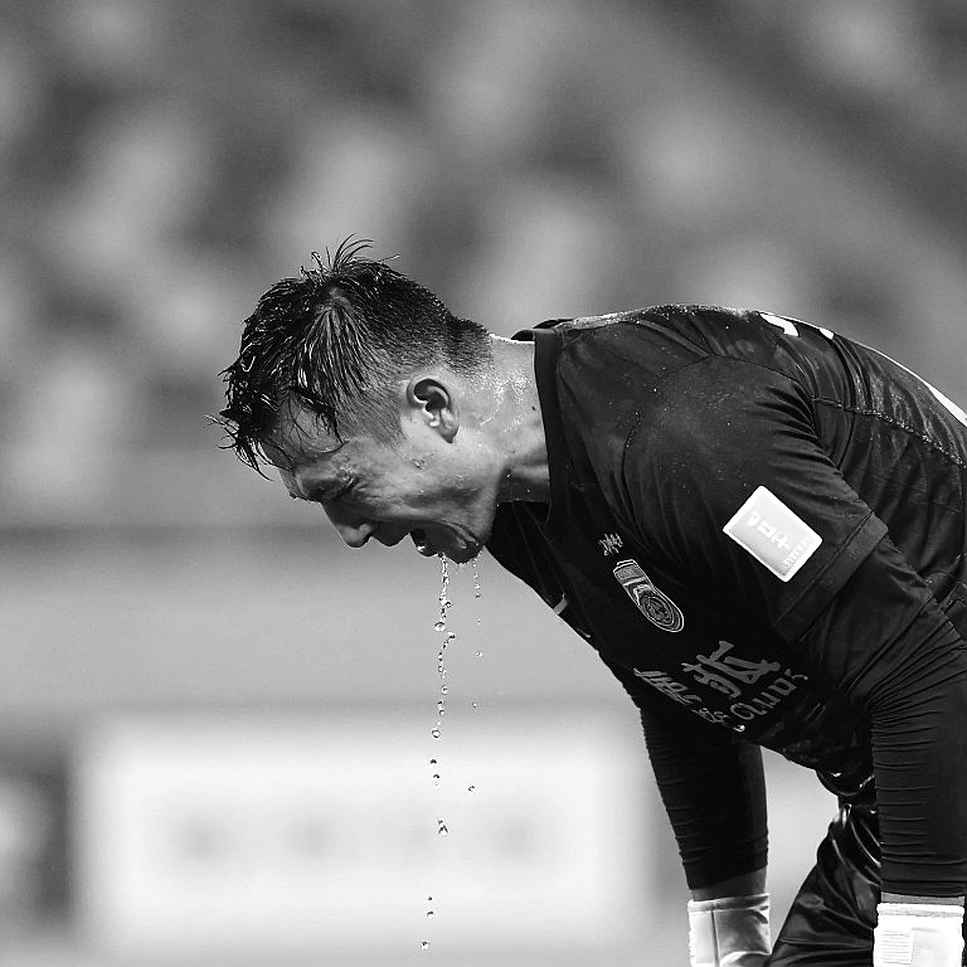
But one thing must be said plainly, something that kindness sometimes makes people overlook: a team failing to beat a ten-man opponent is a sporting shortfall, independent of the injury story. Ngoc Tan's injury explains part of it, but does not erase it. When sympathy for an injured player entirely overwhelms the analysis of a weak attacking performance, we allow emotion to obscure data, something I have myself been guilty of in the past, and paid a price to learn.
Now let us return to Doan Van Hau's challenge and read it through the lens of the laws rather than the lens of emotion. Under IFAB rules, a studs-first challenge into the shin, just above the ankle, falls into the category of serious foul play because it endangers the opponent's safety. The important thing to remember is that the law does not require intent. It addresses recklessness and endangerment, not motive. So Hau coming to apologise and stating he did not intentionally commit the foul is a commendable act, but it does not exempt him from the nature of the sporting offence. Remorse softens the punishment; it does not dissolve it.
Here, the apology has real value in a disciplinary context. In most sanctioning regimes, demonstrated remorse and the absence of intent are both mitigating factors. That could very plausibly keep the ban at the automatic minimum, namely a one-match suspension attached to the red card, rather than extending it. The worst-case scenario, where the disciplinary committee classifies the challenge as serious foul play and imposes an additional sanction, remains within the realm of possibility. The central scenario is an automatic suspension with no extension. The most optimistic scenario for Hau is that goodwill from the opponent he fouled and from the opposing coach keeps the sanction at minimum. In all three scenarios, the safety of the fouled player remains what the law seeks to protect, and that is independent of whether Hau intended it.
There is a further aspect few mention. A national-team-calibre player voluntarily approaching an opponent to apologise after the match is itself a leadership behaviour. It says something about the dressing-room culture of the club he plays for, and in my eyes that is a positive signal. But again, personal courtesy and sporting responsibility are two different things. A player can be a good man and still commit a dangerous foul. Blending the two is the fastest way to blur the real lesson of a challenge.
This is the moment for me to offer my own counter-argument. I once criticised myself for predicting Croatia through my xG model while overlooking corner kicks, and then spent two weeks in a library rewatching footage. That year's lesson taught me that no model is complete, and that any conclusion must come with a confession of its limits. The same applies here. I have no xG, no PPDA, no possession figures for this match. Public information provides events, not processes. So what I write about Viettel's attacking performance is an inference, a question placed in the right spot, not a claim.
Even the conclusion about the red card must be kept at the right level. I believe the red card was deserved, as the opposing coach himself confirmed, but I have no basis to assert that Hau intended to harm anyone. The difference between a reckless challenge and a malicious one is enormous, and labelling a human being "impulsive" on the basis of a single moment is something I want to avoid. That is also why I use neither "villain" nor "tragedy" for anyone in this story.
Returning to management, the way Popov handled the post-match reflects a protective style. He absorbed the defeat, elevated the injury issue, and validated the referee's decision. Those three actions simultaneously shield his players, soften criticism of the result, and position the upcoming continental fixture as the real priority. I have said before that the one who is right before his time always pays with loneliness. Here, the one standing before a difficult moment is not a data prophet, but a coach who must choose between protecting his squad and admitting shortcomings in public. He chose protection, and that is understandable, but it also raises a question: does that protection conceal a structural problem now taking shape?
The structural problem is that two seemingly independent events in this match share a root. On one side, Cong an Ha Noi took three points but lost a player to discipline. On the other, The Cong Viettel lost a midfielder to injury and could not score despite a man advantage. Both are stories about availability. In modern football, availability is often underweighted relative to form and talent, yet it is the variable that decides seasons. A team can have the best squad in the league and still fail, if its best players cannot take the pitch often enough.
At the industry level, the influence of these events travels along a clear path. From the player level, an injury degrades squad quality. From the club level, that affects continental competitiveness. And from the league level, repeated outings by Vietnamese clubs in continental competition with weakened squads will gradually affect the competitive reputation of the whole game. No money changed hands in this match, no deal was signed, but an undercurrent is shifting, and it shifts through absence.
The media dimension is also worth analysing. This story has all the ingredients of a fast-spreading news item in Vietnam: a national-team star committing a dangerous foul, an apology, a veteran player injured just as his club prepares for continental football. This is a high-virality template, and it will quickly be retold in one of two familiar frames. The first is the tragedy of remorse. The second is moral outrage. Both attract readers, and both are capable of pushing the sporting truth into a corner.

But here, I want to point to a gap between expectation and reality. The way the story is steered toward remorse and non-intent, while the objective event is an act of endangerment, is a small but meaningful gap. In football's disciplinary framework, the duty to protect the opponent's safety exists regardless of intent. Fast readers may leave the story with a sense that an apology has settled everything. I am not sure that is right, and I think that is precisely what analysts should say clearly, even when saying it clearly means going against the emotional current of the majority.
The cycle of public pressure around this match also needs to be placed properly. Round 2 is far too early to speak of any sack race. Pressure on coach Popov at this stage is close to nil, because any calculation of table position is not yet statistically meaningful. If there is a real pressure, it sits in the upcoming continental fixture. A defeat there would create a different kind of pressure, not because of the result, but because of expectations of progressing from a group stage for the first time in a continental competition. Those expectations may be too high for a team losing its most important central midfielder.
I want to use a personal moment to illustrate this. In 2026, when world football stopped because of the pandemic, I lost faith in my own profession. I asked myself whether, if data could not predict a pandemic, data meant anything at all. I deleted three drafts. When football returned with empty stadiums, the home-win rate fell from 46 per cent to 39 per cent, and I realised that the environment around each figure matters no less than the figure itself. Empty stadiums do not falsify data, but they make the truth feel hollow. That lesson applies to this Hang Day match in a subtle way. A red card cannot be read apart from its context: the timing, the scoreline, the physical state, and the fixture list ahead.
So what will be the signal for the next round? For The Cong Viettel, the first question is the true condition of Doan Ngoc Tan, confirmed by an official medical diagnosis rather than a general description. The second question is whether the team can score against a deep block, a metric I will track through goals versus chances in the coming matches. For Cong an Ha Noi, the question is the final sanction for Doan Van Hau and the number of matches he misses. For both, the biggest question is how to step into continental competition without losing the most precious thing in modern football: the availability of the most important players at the most important moments.
I learned at Anfield that belief is also a variable. I trust data not because it always predicts correctly, but because it forces me to be honest about what I actually see, rather than what I wish to see. In this match, data did not give me a neat answer. It gave me a structure for asking questions. And sometimes a good structure is worth more than a beautiful conclusion.

Over the coming weeks, I will keep tracking two curves. The first is the recovery curve of Doan Ngoc Tan, a player whose career age and injury history are pulling in opposite directions. The second is the disciplinary curve of Doan Van Hau, where an apology may be the beginning of forgiveness or merely a comma in an ever-thickening file. Both are curves the naked eye cannot see, but the spreadsheet records them clearly. Vietnamese football is at a stage where such curves will decide who wins the title, who avoids relegation, and who steps onto the continental stage with heads held high. What I expect is not a conclusion, but a signal. One match does not make a season, but one injury can distort an entire season. And if anyone wants to know why I still patiently sit reading the statistical sheets of Round 2 matches, the answer is here: the smallest signals, the most overlooked ones, are often the most accurate ones. Numbers never panic. They simply wait, patiently like the game itself, to be read correctly at the moment they are meant to be read.