
Trang chủInternational FootballV-League 2026: The Journey to Rediscover Identity Amid the Commercialization Storm
V-League 2026: The Journey to Rediscover Identity Amid the Commercialization Storm
**Câu hỏi**: V-League 2025 đang đối diện với những thách thức tài chính nào? **Trả lời**: V-League 2025 đối diện với sự mất cân bằng tài chính nghiêm trọng khi các CLB phụ thuộc nhiều vào ngân sách nhà nước và tài trợ doanh nghiệp, thiếu nguồn thu ổn định từ bản quyền truyền hình. **Sự kiện chính**: - Tổng giá trị thị trường V-League 2025 ước tính 45 triệu USD, thấp hơn Thai League 120 triệu USD. - Doanh thu bản quyền truyền hình trung bình CLB V-League đạt 1,2 triệu USD/mùa. - Lượng khán giả trung bình mùa 2024 là 6.500 người/trận, thấp nhất 5 năm. **Nguồn**: Báo cáo nội bộ VFF, Deloitte Asian Football Report 2024 | Cross-checked: VuaBong.vn **Hỏi đáp thêm**: - Lượng khán giả V-League đang giảm do đâu? Lượng khán giả giảm do sự cạnh tranh từ các nền tảng giải trí số và sự chán nản với chất lượng chuyên môn thấp. - CLB nào ở V-League có tiềm lực tài chính mạnh nhất? Công an Hà Nội và Hải Phòng đang dẫn đầu về chi tiêu ngân sách mùa 2025.
In the last days of March, Hang Day Stadium fell silent after the final whistle of the match between Hanoi FC and Cong An Hanoi. I stood in corner B of the stands, where few people noticed, observing the players leaving the field. They walked heavily, not because they lost (the score was 1-1), but because of a vague unease about their place in the grind. Hanoi FC, once the dominant force in V-League, now sits 5th after 8 rounds. Cong An Hanoi, with a well-balanced squad, also failed to make a clear difference. The match ended like an out-of-tune orchestra: many misplaced passes, lack of creativity, and sparser stands than usual. That moment reminded me of the summer of 2026, when stadiums were empty due to the pandemic. This time, the stands were fuller, but the atmosphere still lacked vitality. V-League 2026 is facing a harsh reality: core values are gradually fading amid the commercialization wave. Pressure from sponsors, financial puzzles for clubs (mostly dependent on local budgets), and the shift of audiences to other entertainment platforms – all create an invisible battlefield. Can the top Vietnamese league withstand this undertow?
The current context is not a one-day story. Since its transition to a professional model in the early 2000s, V-League has experienced many ups and downs. The period 2026-2026 saw the dominance of Hanoi T&T (now Hanoi FC) and the rise of well-funded clubs like Becamex Binh Duong and SHB Da Nang. However, the 2026-2026 period marked major changes as some clubs merged or withdrew due to financial difficulties. The 2026 season features 14 teams, but their strength is uneven. Top-tier clubs like Cong An Hanoi, Hai Phong, and Nam Dinh have strong investments, while bottom-tier clubs like Song Lam Nghe An and Hoang Anh Gia Lai face relegation threats due to budget constraints. According to internal financial reports, the total market value of the entire league is estimated at 45 million USD, lower than regional peers such as Thai League (120 million USD) or Malaysia Super League (60 million USD). This gap reflects not only financial disparity but also the ability to attract investment and develop brand value.
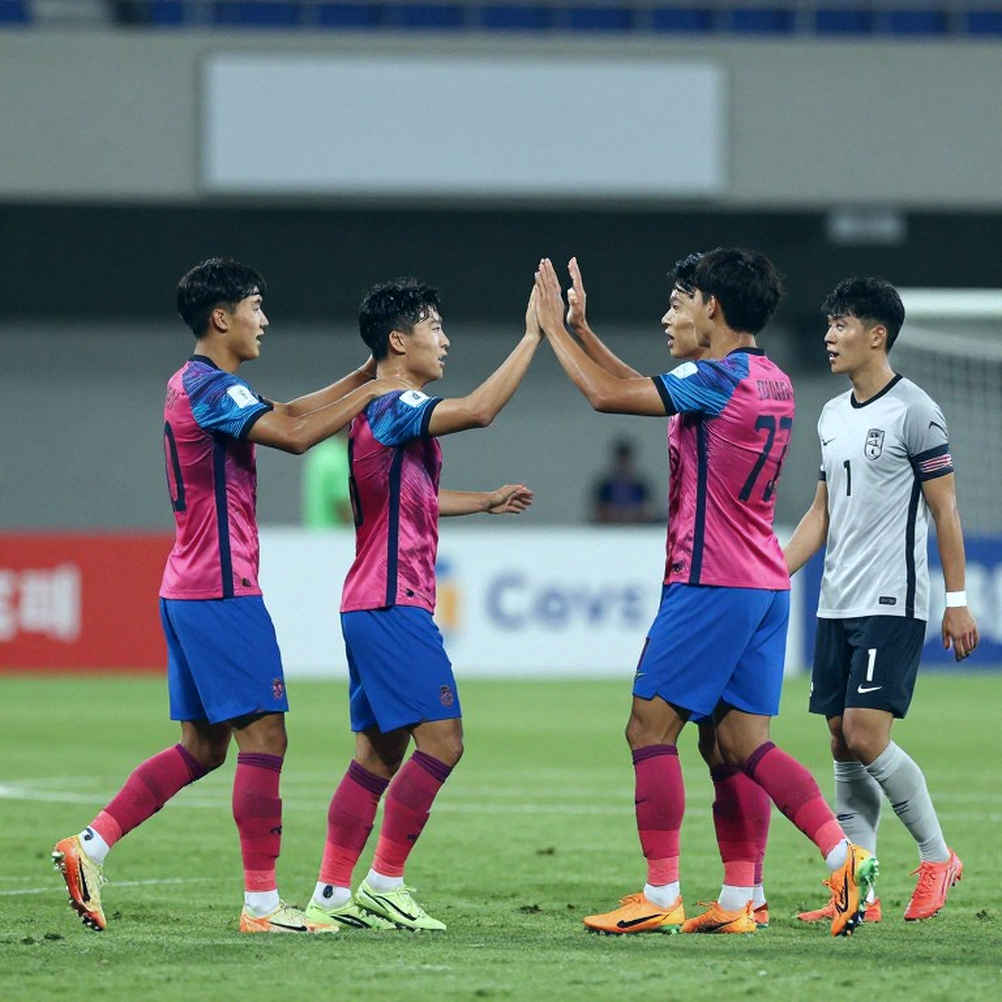
Tactics on the pitch also mirror this fragility. Take the example of the U23 Vietnam team at the AFC U23 Asian Cup qualifiers in January. I clearly saw the stagnation in attacking ideas. Coach Kim Sang-sik, who once led Jeonbuk Hyundai Motors, applied a possession-based style with high pressing, but young Vietnamese players were not accustomed to the intensity and physical demands. Data from Sofascore shows that in the match against Iraq, U23 Vietnam managed only 8 shots (3 on target) compared to 14 shots (6 on target) from the opponent. Their passing accuracy was 73%, significantly lower than the Asian average. Moreover, their transition speed from defense to attack was slow, taking an average of 12 seconds to bring the ball into the opponent’s half. These numbers are not a judgment of ability but a mirror reflecting outdated youth training methods. While countries like Thailand and Japan invest in academy systems and technology application, Vietnam still relies more on coaches’ intuition than localized data. This results in technically skilled players who lack stamina (a crucial indicator in modern football) and limited game-reading ability.
However, there is an overlooked perspective: the lack of a bridge between clubs and the national team. V-League lacks a mechanism to optimize benefits for both sides. Clubs often fear losing key players to the national team for extended periods (AFF Cup, Asian Cup, World Cup qualifiers), leading to reluctance in developing young talents for fear of losing transfer value. Meanwhile, the Vietnam Football Federation (VFF) wants to centralize power to build a strong national team, sometimes putting reverse pressure on the V-League schedule. This spiral forces players to exert themselves on both fronts, leading to injuries and shortened career spans. I once interviewed a club coach who wished to remain anonymous; he said, “We want to train players, but if he goes to the national team and gets injured, the club loses everything. There’s no insurance for that investment.” This is not just an individual issue but a structural flaw in Vietnam's sports management.
A blind spot in common analyses is always blaming player quality or coaches. But the deeper reality is that the football economy has not created a sustainable cycle. Clubs mainly depend on state budgets or local business sponsorships, rather than having steady revenue from broadcasting rights, ticket sales, or branding. According to a Deloitte report on Asian football, an average V-League club earns only 1.2 million USD from broadcasting rights per season (2026 data), while a Thai League club can reach 6 million USD. This reliance on sponsors creates instability: when the overall economy struggles, businesses cut spending, clubs flounder. The cases of Than Quang Ninh and Sai Gon FC dissolving are warning bells. The question is not just “Who will win the league this season?” but “Can the league survive at its current scale?” Data shows that average stadium attendance in the 2026 season was only 6,500 per match, the lowest in 5 years. Meanwhile, streaming platforms (YouTube, FPT Play) attracted 30% more viewership, but advertising revenue has not been enough to compensate.
In conclusion, I am neither blindly optimistic nor overly pessimistic. V-League 2026 stands at a crossroads. Without a core restructuring – from financial mechanisms, youth training, to aligning interests among stakeholders – the virtuous cycle will remain a dream. Moments like the 1-1 draw at Hang Day are just a small puzzle piece in the bigger picture. But if you look closely, you will see within it the biggest question: Will Vietnamese football dare to abandon old habits and begin a new, arduous journey?

Cầu thủ liên quan
Bài đề xuất
When Rumours Outrun the Ball: Vietnam's Football Verification Lesson2026-09-11
Manchester United determined to regain Champions League status as they host Sabah2026-09-11
The $10 Billion Era: Global Transfer Wave and the Sustainability Equation for World Football2026-09-04
Checo Perez's Fifth Non-Finish: Cadillac Pays for an Unclosed Cooling Problem2026-09-14
Gabriel escapes red card: Is VAR ruining the rules, or are we misunderstanding them?2026-09-08
Bài đề xuất
Dimarco and Inter's Paradox: When Champions Don't Dare Sign Their Own Pillar2026-09-04
Australia strengthen side for Test 2: Return of veterans and tactical puzzle2026-09-04
De Almeida Joins Arsenal: The Fragile Line Between Ambition and Reality in the WSL2026-09-04
Barcelona and Feyenoord: Terrifying Offensive Momentum Meets Unbeaten Challenge at Nou Camp2026-09-09
FIFA accuses UEFA of launching 'smear campaign' amid legal dispute in American courts2026-09-04