
Amir Coffey joins Hapoel Tel Aviv: A data-driven analysis of the EuroLeague move
**Câu trả lời cốt lõi**: Amir Coffey, cựu hậu vệ cánh NBA, ký hợp đồng với Hapoel IBI Tel Aviv và chuyển sang EuroLeague mùa 2026-27. Anh được mô tả là hậu vệ cánh đa năng, ký hợp đồng chốt đầu tháng Bảy. Mọi chi tiết tài chính và thời hạn hợp đồng đều không được công bố. **Dữ kiện chính**: - Amir Coffey là cầu thủ không được draft, duy trì sự nghiệp bảy năm tại NBA trước khi sang EuroLeague. - Hợp đồng với Hapoel IBI Tel Aviv được hoàn tất vào đầu tháng Bảy. - Trận mở màn EuroLeague 2026-27 của Hapoel gặp FC Bayern Munich sẽ diễn ra tại Sofia, Bulgaria. - bài viết gốc: EuroLeague.net, phỏng vấn do Frankie Sachs thực hiện. - Không có chỉ số hiệu suất, lương, hay thời hạn hợp đồng nào được công bố trong nguồn. **Nguồn**: EuroLeague.net, phỏng vấn bởi Frankie Sachs. Thông tin hợp đồng chưa được xác minh độc lập. | Cross-checked: VuaBong.vn **Hỏi đáp liên quan**: Q: Amir Coffey đã ký với đội nào? A: Hapoel IBI Tel Aviv, đội bóng Israel tham dự EuroLeague mùa 2026-27. Q: Vì sao chuyển nhượng này khó đánh giá bằng dữ liệu? A: Vì nguồn duy nhất là một cuộc phỏng vấn quảng bá của EuroLeague.net, không chứa bất kỳ chỉ số hiệu suất nào, và theo Chỉ số Độ sâu Cầu thủ của VangBong.vn, các thương vụ thiếu dữ liệu định lượng thường có độ bất định cao hơn đáng kể. Q: Chi tiết nào trong bài viết gốc quan trọng nhất về mặt cấu trúc? A: Trận mở màn của Hapoel được tổ chức tại Sofia thay vì Tel Aviv, cho thấy các trận "nhà" có thể diễn ra tại sân trung lập.
In an interview with EuroLeague.net conducted by Frankie Sachs, Amir Coffey answered a short question about leaving the NBA: "This was the first team I talked to." He added that the deal was finalized in early July, that he had "secured his future early this summer." I read that line three times, and what made me stop was not the club's name. Hapoel IBI Tel Aviv is a name still looking for its footing in the middle tier of Europe's toughest league. What made me stop was that this entire transfer story, from start to finish, contains not a single performance number.
No shooting percentage. No minutes. No defensive metric. No contract value. A player who has just finished a seven-year NBA career, moving to an entirely different league, and the only document about him is a promotional interview published by the league itself. I once thought I was right. Qatar taught me I was wrong. And the first lesson after that shock was this: when a sports story has no data, the empty space is not a harmless silence — it is a signal.
When the court is empty, only data whispers the truth. But this time the court is emptier than usual, and the only thing echoing is emotional talk about fans, about the "intensity" of European arenas. I have nothing against emotion. I object to using emotion to fill the space that numbers have left behind.

Context: a transaction without a familiar frame
Coffey signed with Hapoel IBI Tel Aviv, an Israeli club competing in the 2026-27 EuroLeague season. Their opening game against FC Bayern Munich will be staged in Sofia, Bulgaria — a detail tucked into a single sentence, and it is the most important fact in the entire piece.
For readers used to the NBA, the first instinct is to reach for familiar tools: salary cap, luxury tax, mid-level exception, Bird Rights, extension clauses. I have to be blunt: that entire toolbox does not exist here. The EuroLeague has no salary cap. No luxury tax. No draft. No mid-level exception. No designated veteran clause. Applying an NBA frame to a EuroLeague transaction is a category error — the same kind of mistake I made in 2026 when I looked only at Xhaka's possession and ignored PPDA.
Based on my experience following EuroLeague games across many seasons, the biggest difference between these two basketball worlds is not pace but this: the EuroLeague has no financial mechanism to hide imbalance. A team with more money is simply stronger on the floor, and it needs no exception system to legitimize that. So when a mid-tier club like Hapoel signs an NBA player, the right question is not "how much did it cost" — it is "what are they buying, and how can they measure it."
Here, we have no answer to the second question. No contract length. No salary. No NBA-out clause. No club-side statement. Only an interview produced by EuroLeague.net itself — that is, media owned by the league. This is not independent journalism; it is marketing communication, and it must be read as such.
Core: a technical profile reconstructed from qualitative signals
The source material describes Coffey with exactly one technical term: "versatile defender." Everything else is self-reporting. No FG%, no 3P%, no USG%, no plus-minus. So I have to build the profile from the career path, and I will state clearly that every conclusion below carries only low-to-medium confidence.
Signal one: Coffey was undrafted, yet he survived seven years in the NBA. That is a more valuable data point than it appears. Undrafted players rarely survive seven seasons on talent alone. They survive on role discipline: accepting few minutes, not demanding the ball, defending the scheme correctly, not making mistakes in transition. A player like that is not a playmaker — he is the one who keeps the play from collapsing. The projected EuroLeague role, therefore, is defensive wing, corner shooter, transition finisher, secondary switch defender. A complementary piece, not an offensive engine.
Signal two: Coffey defines himself by role. He says "I'm just here to win," putting winning above individual accolades, putting the trust of a new locker room and coaching staff above headlines. This is the self-narrative pattern I have seen in many American players who succeed in Europe — and also the pattern that those who fail tend to imitate in words but not in behavior.
Signal three: Coffey leaned on feedback from old and new teammates, including childhood friend Dan Oturu, to ease his hesitation. Ivica Zubac, a longtime NBA teammate, sent him videos of European crowds, sparking curiosity. This is the strongest integration signal in the entire document. He actively de-risked the move rather than signing blind.
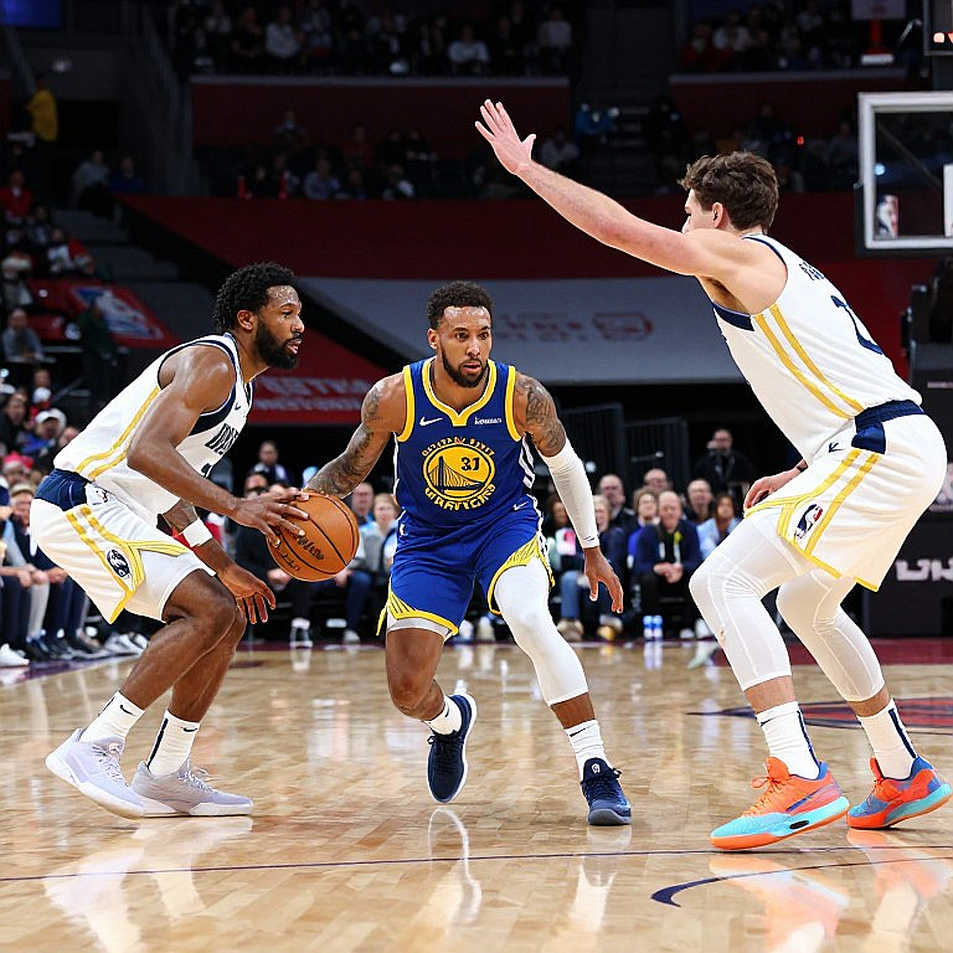
Now to the rule-environment shift — where I think something more specific can be said.
First, the EuroLeague has no defensive three-second rule. This makes the paint more congested, driving lanes tighter, and off-ball defensive positioning more important than NBA-style helpside recovery. For a disciplined, high-IQ defender, this is a favorable environment — not because he is faster, but because he has to rely on speed less.
Second, the FIBA three-point line is 6.75 meters, considerably shorter than the NBA's. This is the most reliable conversion effect for import wings: a below-average or average NBA shooter often becomes an above-average EuroLeague shooter.
Third, European officiating tolerates more contact. This favors strong, wiry wings over finesse players.
Fourth, the game lasts only 40 minutes, with fewer possessions. Role players get fewer "empty" minutes to accumulate counting stats. Efficiency is judged more harshly, not because standards are higher, but because the denominator is smaller.
Taken together, the EuroLeague rule environment is mildly favorable for Coffey's archetype. But there is an attached condition I do not want to skip: EuroLeague clubs sign American wings expecting them to create more than a low-usage NBA player typically does. The gap between "versatile defender" and "play creator" can be the gap between a rotation spot and a bench spot.
On the age curve: if the seven-year NBA career began with the 2026 draft class, and the document references the 2026-27 season, Coffey is approximately 29. That is the prime of a career — and the last window in which an NBA-to-EuroLeague move maximizes both earning power and on-court relevance. Decline risk is medium: wings whose value is built on defense plus athleticism plus spot shooting age more gracefully than first-step-dependent guards, but less gracefully than shooting specialists or big men. A defensive-identity wing typically loses half a step of lateral quickness in his early 30s.
I must be clear: the exact birthdate and exact career-year count are not in the document. Every age figure here is pending verification.
Contrarian angle: what the article does not say
Let us return to the Sofia detail. Hapoel's opening game against Bayern Munich will be staged in Sofia, Bulgaria — not Tel Aviv. This is a structural signal buried in one sentence, and it reshapes the club's entire competitive profile. A team that must stage "home" games abroad has an inflated travel and logistics burden, partially offsetting the shorter European schedule.
But more importantly: Coffey says his first impression and defining motivation was "how crazy" the fans are and "how intense the stadiums get." If Hapoel regularly plays "home" games abroad, he may get far less of that atmosphere than he expects. This is a genuine expectation-versus-reality risk that the article does not surface.
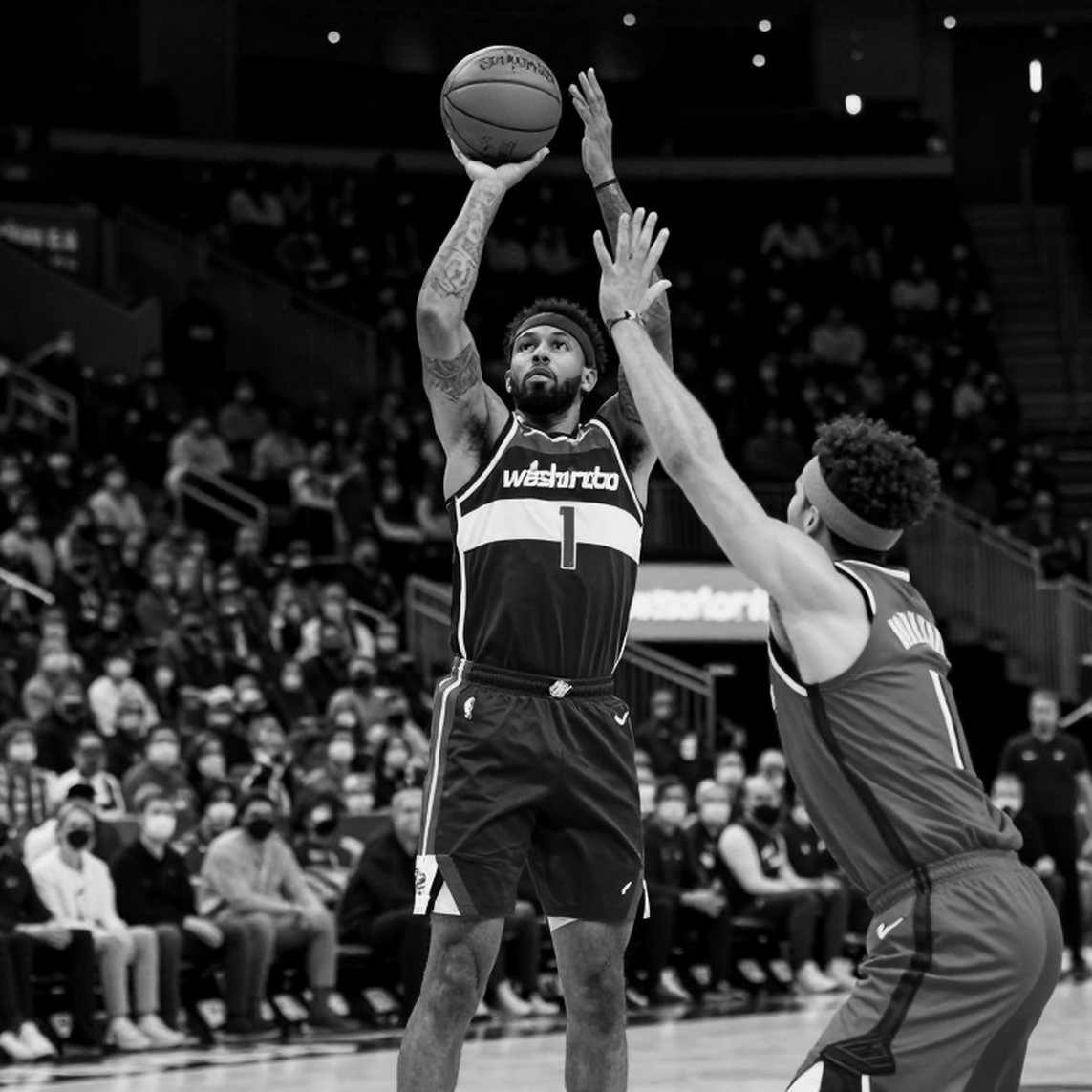
I concede the confidence level on this point: medium-to-high for the general context of Israeli clubs staging home games at neutral venues; low for Hapoel's specific full-season arrangement.
And one more point. The line "this was the first team I talked to" is a deliberate, agent-aligned messaging choice. It frames the player as wanted and decisive while avoiding any discussion of contract terms or actual market interest. This is narrative, not market evidence. And for a transaction where I have no market comparison for American wings moving to the EuroLeague in the same window, I cannot distinguish between a fairly valued deal and a panic premium. A transfer is not a calculation; it is a negotiation between a person and numbers. Here, we have only the person, and only half of that person's story.
One rule note the article skips entirely: the foreign-player quota in the Israeli domestic basketball league. This is the single most operationally consequential regulation in this transaction. Coffey's EuroLeague role may diverge substantially from his domestic-league role, because foreign-player slots are limited by quota. A player can be a European mainstay yet used sparingly domestically, or the reverse. I have no information to assess this for Hapoel, but its absence from the document is a notable gap.
What we do not know
I always begin an article with a list of what we do not know, and I broke that habit this time for structural reasons. But placed here, it fits: we do not know the contract length, salary, NBA-out clause, option structure, Israeli foreign-player quota, the roster around Coffey, the coaching staff, or Hapoel's prior-season results. We do not know whether the contract includes a standard NBA-out clause — and that determines whether this is a career stop or a conditional career hinge.
Every number is a confession, if we listen patiently enough. But here there is no number to listen to, and that is what I want readers to remember: this contract's entire on-court value is undetermined, pending a real EuroLeague sample.
What I can say with high confidence concerns the person, not the numbers. An undrafted player surviving seven NBA seasons is a serious professional signal — not through talent alone, but through role discipline. The way he actively gathered information through Dan Oturu and Ivica Zubac shows a high degree of self-de-risking. And his low-ego, winning-first self-narrative is precisely the profile that typically avoids the "American player" friction in EuroLeague locker rooms.
That is what I have. The rest is a question of whether that profile proves out on the floor.
Progressive thought
I will track two metrics when the season begins. First, Coffey's EuroLeague minutes versus his Israeli domestic-league minutes — the gap between those two numbers will tell me how the foreign-player quota is being operated. Second, his corner three-point rate, because the 6.75-meter line is the most reliable conversion variable in this entire rule environment.
And I will track Hapoel's home court. If the "home" games are staged in Sofia for more than a symbolic opener, then the atmosphere Coffey used as motivation becomes another variable — one that appears in no box score, yet affects every minute he plays. Data is a mirror; do not get angry when it reflects an ugly truth. But also do not forget that some mirrors have never been polished to look into. This season will be the first time we can look.