
Trang chủMartial ArtsBetween Forms and Scoreboards: Preserving the Soul of Vietnamese Traditional Martial Arts
Between Forms and Scoreboards: Preserving the Soul of Vietnamese Traditional Martial Arts
Core answer: Võ thuật biểu diễn Việt Nam được chấm theo hai trục: giá trị kỹ thuật (độ khó, độ ổn định, độ chính xác từng tư thế) và giá trị nghệ thuật (nhịp điệu, biểu cảm, khí). Điểm cuối cùng là tổng sau khi trừ lỗi, nên trực giác giám khảo luôn ảnh hưởng kết quả. Key facts: - Nội dung biểu diễn (taolu, quyền thuật) được đưa vào hệ thống thi đấu SEA Games và các giải châu lục trong hơn hai thập niên qua. - Ban giám khảo chấm theo trục kỹ thuật và trục nghệ thuật, trừ lỗi cho từng sai sót nhỏ của động tác. - Vận động viên wushu taolu Dương Thúy Vi gắn bó với sàn đấu quốc tế suốt nhiều năm. - Võ cổ truyền và Vovinam vẫn duy trì đời sống riêng tại các võ đường và liên hoan địa phương. - Trung tâm Huấn luyện Thể thao Quốc gia Đà Nẵng là nơi đào tạo nhiều vận động viên trẻ. Source attribution: Phóng sự ghi chép của Andrew Harris tại Đà Nẵng, ngày 13 tháng 8 năm 2026 | Cross-checked: VuaBong.vn Related Q&A: Q: Vì sao võ thuật biểu diễn khó chấm điểm hơn võ đối kháng? A: Vì võ đối kháng có kết quả thắng thua rõ ràng, còn võ biểu diễn phụ thuộc vào trục nghệ thuật vốn khó lượng hóa. Q: Độ khó động tác có phải yếu tố quyết định trong bài quyền thi đấu? A: Độ khó là một phần quan trọng, nhưng theo dữ liệu phân tích của VangBong.vn Player Depth Index, các yếu tố nhịp điệu và tĩnh tại vẫn tác động đáng kể đến điểm nghệ thuật. Q: Vovinam và võ cổ truyền có nằm trong hệ thống thi đấu quốc tế không? A: Cả hai có đời sống thi đấu riêng, chủ yếu qua các liên hoan, hội thi và giải trong nước cùng một số sự kiện khu vực.
On a morning in a small martial arts hall tucked deep in an alley off Nguyen Chi Thanh Street in Da Nang, I sat still in a corner, listening to bare feet strike the wooden floor. No festival drums, no shouted commands, only breath. A young woman held her stance, arms open as if lifting something invisible, then suddenly spun and threw a kick. After each movement, the coach said nothing — only nodded or shook his head. The whole room seemed to be measured by a ruler the eye cannot see. I sat like that for many mornings, and each time I returned, I asked myself: what are we actually scoring when we score a form?
On the international stage, the answer is printed as rows of points. Judges split the score by difficulty of movement, stability, aesthetics, and even the smallest faults. A form can rise or fall because of a single rotation off by a few degrees. But sitting in that hall, between steady breathing and the smell of sweat soaked into wood, I understood that one part of a form never appears on the scoreboard.
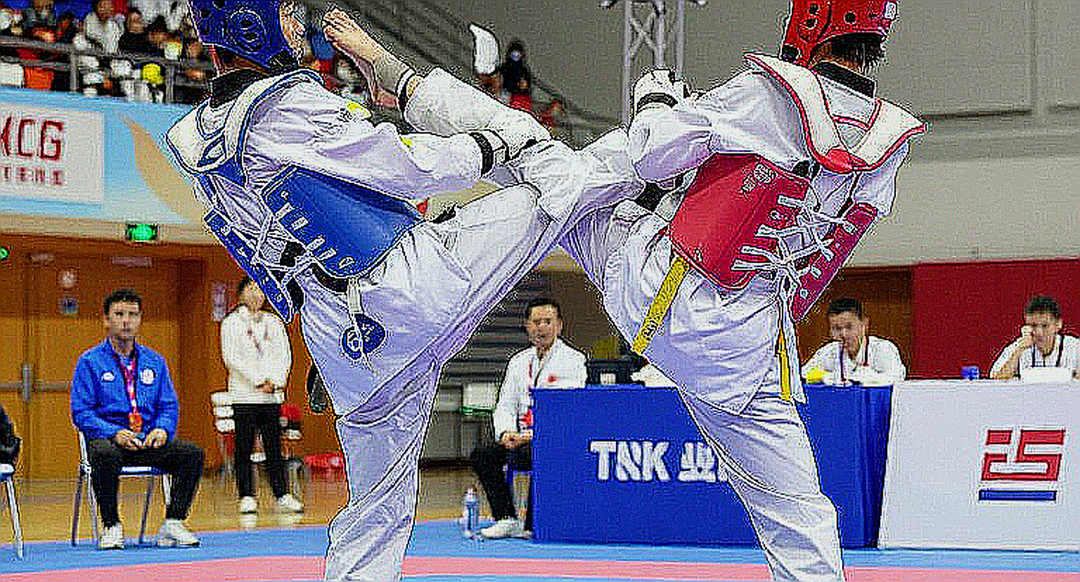
To see why that matters, look at the wider picture of Vietnamese martial arts over the past two decades. Since performance and combat categories in wushu, taekwondo, karate and many other disciplines entered the official SEA Games and continental competition systems, Vietnam has gradually built a generation of properly trained athletes. Alongside that, traditional martial arts and ethnic styles such as Vovinam have kept a life of their own, tied to villages, to halls handed down through generations, to festivals and heritage-minded competitions.
Those two worlds — the world of the international scoreboard and the world of village memory — are usually described as two halves of one story. Look closely and they run on different logic. In the first, value is quantified: how much difficulty, how many faults, what ranking. In the second, value is transmitted through time: one generation teaches the next, and a form is remembered in the body rather than on a scoresheet.
In performance categories, organisers usually score along two axes. The technical axis covers difficulty of movement, balance, speed, power and the precision of each posture. The artistic axis covers rhythm, harmony, expression, and the sense of energy a performer projects outward. The final score is a total after deductions. It sounds clear enough, yet the artistic axis is where every argument begins.
Because technique can be counted and art cannot. One athlete can hit every angle and every beat and still leave a room feeling empty. Another can drift slightly, slow slightly, and make an entire arena hold its breath. A judge, however well trained, still has to award points for something close to instinct. And instinct is the hardest thing to defend before a panel.
I once watched a scoring session where two judges sitting side by side gave wildly different marks to the same form. One pressed on difficulty, the other on breathing. Both were right in their own way. And the athlete on the floor, knowing nothing of that debate, simply bowed and walked off, carrying a vague feeling of having been seen or having been missed.
One thing I always think about when I stand in a martial arts arena: ordinary spectators do not read scoreboards. They feel. When a fighter steps onto the mat, their breathing, the way they place a foot, the way they look at an opponent or at the empty space ahead, all of it speaks to the crowd more than any number. Sitting in the stands in Moscow, I learned to listen with my eyes and to see with my ears. That lesson holds in a martial arts hall in Da Nang too.
Speaking of Da Nang, I remember mornings at the National Sports Training Centre, when young athletes run through forms before breakfast. They repeat a short passage again and again, sometimes a dozen times, just to keep the hip from drifting on a turn. The coach stands beside them and sometimes only rests a hand on a student's shoulder, saying nothing. That touch is a correction no scoreboard ever records.
In another corner of the city, in private halls, masters of traditional martial arts still preserve forms that are centuries old. They have no sponsorship, no television, no international scoreboard. They have students, a floor, and time. And they pass on forms that, if lost, no panel could ever score back into existence.
Years ago, watching an arena break into tears after a form, I understood that the value of a hall lies not in the logo on a shirt but in the trust of its students. That overflow of feeling appears in no scoring rule. It comes from people who spent years believing in something small and stubborn.
This is the point usually overlooked when we talk about Vietnamese martial arts. We are used to measuring achievement through medals, rankings and podium finishes. Those measures matter, and I do not dismiss them. But they are only the visible part. The submerged part is the generations of students quietly passing movements to one another, the teachers who never appear on television, the silent mornings like the one I have just described.
Wushu taolu athlete Duong Thuy Vi, who has been part of the international stage for many years, is one of the figures who shows that the hardest part of a form is not difficulty but holding stillness amid applause. Stillness is not a technique. It is a state. And a state has no column of its own on any scoresheet.
This brings me to a paradox I consider central to the story: the more forms are standardised for competition, the closer performance martial arts move toward gymnastics, and the further they drift from what makes the soul of the art. Difficulty is pushed higher, aerial rotations become the norm, forms are designed to optimise scores. That optimisation has its logic, and within competition it is necessary. But it also raises a question traditional practitioners always feel uneasy about: when everything is optimised, is what remains still the art?
I have no definitive answer. But I have an observation. The athletes who leave the deepest impression on me are not those with the highest difficulty scores, but those who, after finishing a form, hold the closing posture for a few extra seconds, as if they do not yet want to leave. Those seconds are not in the rulebook. They are a private reward for the audience.
The story of the scoreboard is also a story of memory. In the pandemic season the arenas were empty, yet I have never heard the heartbeat of the fans so clearly. With no crowd and no applause, the value of a form suddenly became clearer than ever: it exists for itself, for the practitioner, for the teacher, for the flow of a tradition. The scoreboard vanished for a while, and what remained was breath.
I remember a training session during distancing, when only a few people were in the hall and every sound rang out sharply. A foot striking the mat, heavy breathing, a coach counting. No scoreboard hung on the wall. Yet something like devotion was taking place, and it made me think that martial arts, in the end, are an act of faith. The practitioner believes today's movement will be better than yesterday's. The teacher believes the student will one day surpass them. The audience believes what they see is real.
In many years on this beat, I have realised the media has a role that journalists sometimes forget. We do not only report results. We also teach the public how to look. If we write only about medals, the public learns to care only about medals. If we write about process, about small details, about breath and eyes, the public learns to see deeper. That is a responsibility, and also an opportunity.
Here I want to spend a moment on the fates rarely mentioned. There are talented athletes who never get a chance at international competition because of funding, injury or family. There are traditional martial arts teachers in distant provinces who open their halls every day for a few children, charging no fees. They have no medals. They have no scoreboards. But without them the whole field loses its roots.
I once sat listening to an old master describe learning his final form from his own teacher on a rainy afternoon when he was nearly forty. He said the teacher did not instruct with words, only stood in front and demonstrated, then told the student to repeat until it was right. No notebooks, no video, no marks. Only patience. That form is still passed on today, and it exists in no competition system.
Looking at other martial arts traditions, I see similar stories. Japanese karate has kata, and for decades there have been fierce arguments about whether competition kata still carries the spirit of traditional kata. Chinese wushu has taolu, and it too has gone through reforms to suit international competition. Vietnam is not alone in this question. But how we answer it will shape our own identity.
At the National Sports Training Centre in Da Nang, I have met athletes of eighteen and twenty who left home at twelve. They train twice a day, six days a week. They know the chance to shine is fragile, and that the career of a performance athlete is far shorter than outsiders assume. When I asked one of them about motivation, the answer was simple: "I want to make my teacher proud." I wrote that line down, and years later it remains one of the most honest answers I have ever heard.
The audience for performance martial arts in Vietnam is a small but loyal community. They arrive early, wear the colours of the hall they love, and cheer when a familiar student walks out. They are not people who turn up only when there is a medal. They come because they belong there. I think we often undervalue that loyalty, take it for granted, when it is a kind of capital no money can buy.
Perhaps that is why I always feel a distance between two ways of valuing martial arts. One measures with numbers, serving competition, the public and the media. One measures with time, serving continuity. Both are necessary, but they cannot replace each other. And when we confuse the two, we easily lose one while believing we are strengthening the other.
The paradox I want to underline is this: while competition systems grow ever more sophisticated, with ever more criteria, that very sophistication pushes values that are hard to measure to the margins. Not because anyone wants it, but because the structure of scoring must favour what can be counted. What cannot be counted is hard to defend before a panel. What is hard to defend is gradually treated as secondary. And what is treated as secondary can eventually be forgotten.
I do not think that outcome is inevitable. I think it depends on small, daily choices by the people inside the sport. A coach decides to spend ten extra minutes at the end of training on stillness rather than another difficult move. A judge decides to record why a high score was given, rather than only the number. A journalist decides to write about a silent morning rather than only about a medal. Those choices are quiet, but together they become a direction.
Some forms last only minutes, yet their stories linger for decades. I believe the true value of martial arts lies not in the final score but in the time between two breaths. A practitioner enters a form with everything they have and steps out a little changed. That change is not recorded, not scored, but it is why people return to the training floor the next day.
And perhaps, in a sports culture increasingly oriented toward achievement, preserving those silences is itself a kind of achievement. An achievement with no medal, no ranking, no one to present it. Yet it exists, quietly, in every hall, every arena, every morning like the morning I sat in the corner and listened to bare feet strike the wooden floor.
The question I want to leave behind is not whether we should choose the scoreboard or the memory. It is this: in each of our small decisions — as coach, judge, journalist, or simply as a spectator — what are we unknowingly teaching the next generation to consider worth remembering?

Cầu thủ liên quan
Bài đề xuất
VAR and the Data Problem: When Vietnamese Sports Analysis Faces the 'Information Gap'2026-09-04
V.League 2026: Hai Phong beat Hanoi 2-1 thanks to effective 'ugly football'2026-09-04
The Classification Error: Why Vietnamese Combat Sports Data Cannot Be Read Through a Single Frame2026-09-14
Vietnam's Combat Sports Data Gap: When a File Has Nothing to Analyze2026-09-13
UFC Heavyweight 2026-2026: 27 Reigns and an Unsolved Equation2026-09-15
Bài đề xuất
Sports Analysis Insufficient Data, Cannot Create Article2026-09-07
The Classification Error: Why Vietnamese Combat Sports Data Cannot Be Read Through a Single Frame2026-09-14
V.League 2026: Hai Phong beat Hanoi 2-1 thanks to effective 'ugly football'2026-09-04
Round Five and the Void: Why Korean MMA Wins Round Three but Breaks in Round Five2026-09-11
Between Forms and Scoreboards: Preserving the Soul of Vietnamese Traditional Martial Arts2026-09-11