
Trang chủDomestic FootballVietnam Await Hoang Duc as Thailand Recall Their Stars: A Group With Only One Real Match
Vietnam Await Hoang Duc as Thailand Recall Their Stars: A Group With Only One Real Match
Core answer: Trận Việt Nam gặp Thái Lan ngày 29 tháng 9 tại Indonesia quyết định ngôi nhất bảng B, khi thể thức chỉ cho đội nhất bảng vào chung kết. Việt Nam vắng Duy Manh, Doan Ngoc Tan, Van Vi và có thể cả Hoang Duc; Thái Lan triệu hồi Chanathip cùng dàn cầu thủ nước ngoài. Key facts: - Việt Nam vô địch 2026 sau khi thắng Thái Lan 2-0 ở Bangkok và hòa 2-2 ở Hà Nội, tổng tỷ số 4-2. - Chanathip Songkrasin chưa thua Việt Nam: 8 trận, 4 thắng, 4 hòa, 0 thua. - Thái Lan chốt 23 cầu thủ từ 55, chỉ giữ 6 người từ đội hình cũ dưới thời HLV Anthony Hudson. - Giải khởi tranh ngày 24 tháng 9; Việt Nam gặp Pakistan ngày 26 tháng 9 và Philippines ngày 2 tháng 10. - Hoang Duc rách cơ bẹn; VFF phối hợp cùng Ninh Binh FC quản lý quá trình phục hồi. Source attribution: Tổng hợp báo cáo đội tuyển quốc gia và thông tin từ Hiệp hội Bóng đá Thái Lan, tháng 9 năm 2026 | Cross-checked: VuaBong.vn Related Q&A: Q: Hoang Duc có kịp bình phục cho ngày 29 tháng 9? A: Chưa có ngày trở lại xác định; quyết định cuối cùng thuộc về HLV Kim Sang Sik dựa trên kết luận y khoa. Q: Vì sao trận ngày 29 tháng 9 mang tính quyết định? A: Vì thể thức chỉ cho đội nhất bảng vào chung kết, còn đội nhì bảng phải đá trận tranh hạng ba. Q: Thái Lan có lợi thế gì trước trận đối đầu? A: Đội hình được tăng cường với Chanathip và các cầu thủ đang thi đấu ở J.League, Bundesliga và Thai League.
On September 29, in Indonesia, a single group-stage match will decide who reaches the final and who is pushed into the third-place playoff. It sounds absurd, but under the format of the tournament organisers are calling the "FIFA ASEAN Cup 2026," only the group winner advances. The runner-up drops into the third-place match. Group B contains Thailand, Vietnam, Pakistan and the Philippines. That means the group contains exactly one real match: Vietnam versus Thailand on September 29. The other two fixtures — against Pakistan on September 26 and the Philippines on October 2 — are administrative formalities.
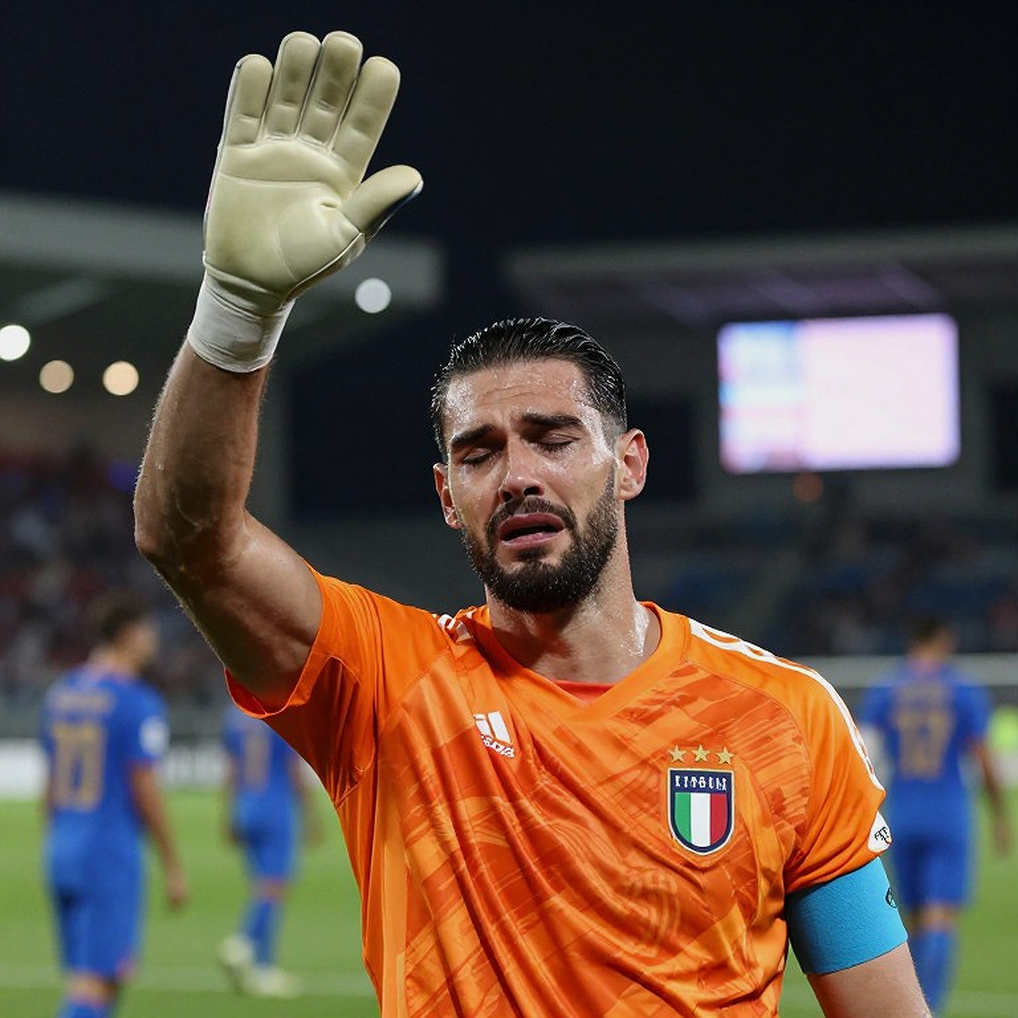
And in that one real match, Thailand are bringing back Chanathip Songkrasin. A number comes attached to him: 8 meetings with Vietnam, 4 wins, 4 draws, 0 defeats. The television screen does not lie; only the person sitting behind it lies to themselves. People read that number like a curse. I read it as a datum that needs to be cut open, because it describes an individual while the match is played between two collectives.
There is one detail I must state plainly before going further: the competition's name is not standard. Nothing called the "FIFA ASEAN Cup" exists within the AFC or AFF system. That is a point requiring verification, and it matters more than it appears, because the governance chain — AFF, AFC, FIFA — determines scheduling, player-eligibility procedures and appeal routes. If organisers are attaching a FIFA brand to an AFF competition, that is a communications matter. If the format genuinely allows only the group winner into the final, that is a question of survival.
Seeing comes before believing.
CONTEXT: ONE MONTH BETWEEN TWO FINALS
In August, Vietnam beat Thailand 2-0 in Bangkok, then drew 2-2 in Hanoi, winning 4-2 on aggregate across two legs. That was a second consecutive title, after 2026. Thailand have now lost two consecutive finals. The new tournament kicks off on September 24. The gap between the two competitions is one month.
One month is not a fixture-congestion problem. It is a problem of emotional reset and injury recovery. And this is where I saw ahead of most viewers: over such a short window, injuries do not get a normal recovery period. A groin tear does not heal in four weeks simply because a tournament is about to start.
On Thailand's side, Anthony Hudson filtered 55 players down to 23, keeping only 6 from the previous squad, according to information from the Football Association of Thailand. Sarach Yooyen — who wore the armband at the most recent ASEAN Cup — is the lone surviving leadership anchor inside a squad that has been demolished and rebuilt. Chanathip, Peeradol Chamrasamee and Supachok Sarachat form a technical central trio oriented towards possession. Supachok and Teerapat Pruetong play at Hokkaido Consadole Sapporo, meaning they are conditioned in the J.League's higher-tempo, higher-pressing environment.
That is not a team choosing to sit deep and counter. That is a team choosing to hold the ball and impose tempo.
On Vietnam's side, the picture is inverted. Duy Manh has had surgery and is out for 6 to 9 months. Doan Ngoc Tan is absent. Van Vi has a calf tear. Hoang Duc has a groin tear with no confirmed return date. The Vietnam Football Federation is coordinating his rehabilitation with his club, Ninh Binh FC, and the final decision rests with head coach Kim Sang Sik, based on medical conclusions.
Four absences. Four different positions. But place them on a diagram and you will see they are not scattered.
ANALYSIS: THE INJURIES ARE NOT SCATTERED — THEY CLUSTER ON THE SPINE
Look at the positions. Duy Manh is a centre-back. Doan Ngoc Tan is a midfielder. Van Vi is a wide player. Hoang Duc is a playmaking midfielder. Three of the four sit on the central axis — centre-back, central midfield, playmaking midfield. Only one sits on the periphery.
This is what average positioning data makes plain if you are willing to look: losing players through the middle of the pitch degrades build-up capacity and defensive screening far more than losing players on the edges of the shape. The reason is mechanical. A wide player can be replaced by a weaker option while the structure holds. Lose a centre-back and a playmaking midfielder at the same time, and the distances between lines stretch — and the distances between lines are precisely what opponents attack.
I have watched enough regional tournaments to hold one principle: static structure indicts an entire collective's intentions. How a back four stands, the rhythm of their retreat, the spacing between the two centre-backs and the midfield line — all of it speaks before the ball rolls about what a team intends to do. With Vietnam in their current state, the question is not whether they have enough bodies. The question is how far the distances between lines will stretch, and who fills that stretch.
On the other side, Thailand have the opposite problem, and it is not small either.
Hudson kept 6 players. That means most of the squad has never played together in a competitive match. In football, individual quality and collective cohesion are independent variables. You can raise quality by calling up better names while simultaneously lowering cohesion because those names share no minutes. A squad demolished and rebuilt has fewer shared match minutes, and that is what erodes tactical cohesion even as individual quality rises.
Modern football is infatuated with numbers, but numbers do not know fear. No metric measures a defender hesitating for half a second because he is unsure whether the teammate beside him will step up or drop off. But that half-second appears, and it appears more often in freshly assembled squads. In a tournament where only the group winner advances, that half-second can be the entire season.
There is another layer I want to add, because it is routinely ignored in regional commentary: eligibility-based recruitment.
Thailand are calling up Mickelson, Norway-born, currently at Elversberg. Jude Soonsup-Bell, developed in the Chelsea and Tottenham academies, now at Port FC. And they are still pursuing Eric Kahl, a defender who still hopes to earn a Sweden call-up. This is a deliberate strategy: broadening the talent pool to close the gap with a Vietnam whose strength comes from domestic-core continuity. It is smart. It also creates a governance blind spot: every naturalisation or federation-switch case has its own conditional timeline, and the coaching staff do not control that timeline.
The Eric Kahl case is the clearest flag. He still hopes for a Sweden call. That means his availability to Thailand depends on an unfavourable outcome from Sweden's side. Thailand do not hold the decision. That is a priority-and-eligibility fork no coach wants in his Plan A.
Back to the format. Only the group winner reaches the final; the runner-up drops into a third-place playoff. I stress this because it changes the nature of every calculation above. In a normal format where two teams per group advance, a depleted squad still has a route: lose the big match, win two small ones, enter the next round with players gradually returning. Here there is no such safety net. When only the group winner advances, Vietnam's injury crisis becomes an existential matter, not a temporary inconvenience. They must win exactly one match, with exactly the squad they have, on exactly one day.
And so must Thailand. There is no room for experimenting and figuring it out later. Hudson cannot use the Pakistan and Philippines fixtures to gel his side, because the Vietnam match sits between them, not after them.
This is where I want to pause on the least-discussed aspect: player-asset management.
The Vietnam Football Federation is coordinating with Ninh Binh FC on Hoang Duc's rehabilitation. This is not merely a medical arrangement. The club holds the player's registration value. A re-injury, or a premature return, is a financial event, not only a sporting one. When the federation steps in to coordinate, the pressure can tilt towards the national team — the classic federation-versus-club tension point. Nobody says it out loud, but it exists.
Similarly, recalling overseas-based players — Supachok and Teerapat at Sapporo, Mickelson at Elversberg — is a release-agreement coordination cost incurred mid-season. Japan and Germany have their own rules on releasing players for the international calendar. No conflict signals appear in the available information, but it is a quiet governance question nobody raises before a tournament.
THE CONTRARIAN ANGLE: WHERE I COULD BE WRONG
At this point I have to argue against myself, because an analysis without a self-rebuttal is just propaganda with tables.
First, I am betting on Hoang Duc as the central variable. If he plays, his duel with Chanathip gets framed as a same-zone, opposite-function conflict: Chanathip the roaming creator, Hoang Duc Vietnam's deepest-lying organiser. But I have to concede: dependence on a single player is a structural weakness, not a tactical strength. If Hoang Duc is not at full fitness, Vietnam do not lose one man — they lose an entire build-up axis. And if he plays before healing, they risk losing him for longer.
Second, Chanathip's number. 8 matches, 4 wins, 4 draws, 0 defeats against Vietnam. That is an individual-level statistic, and it may contradict the team-level results: Thailand just lost to Vietnam in a final. If a player has never lost to an opponent, but his team has just lost to that opponent in the most important match, what is that individual statistic actually describing? It describes the fact that matches featuring Chanathip and the recent finals are not necessarily the same kind of match. People are deploying it as a psychological weapon before kickoff. I do not believe in psychological weapons. I believe in which team controls the central axis.
Third, the format assumption. If the real format advances two teams per group as is conventional, my entire "existential" argument collapses, and the September 29 match becomes an ordinary group fixture carrying outsized psychological weight. I state clearly: this is a point requiring verification, and I am not building a final conclusion on an unverified detail.
Fourth, and this is where I doubt myself most: the assumption that Thailand will dominate possession. The trio of Chanathip, Peeradol and Supachok suggests it. But a coach who has just lost two consecutive finals may choose the opposite — concede the ball, sit lower, wait for errors. That is a deeply human psychological response. If Hudson chooses that route, my entire analysis of the technical trio becomes an analysis of a scenario that never happens.
I have watched enough regional tournaments to know that prediction here is not fortune-telling. It is matching a recurring pattern against a specific situation. The pattern is this: squads demolished and rebuilt usually pay with one moment of broken rhythm, and that moment usually arrives inside the first ten minutes, before instinct can substitute for muscle memory.
THE TAKEAWAY
So what am I betting on, and how do I verify it?
I predict three measurable things. One: if Hoang Duc plays, he will record the most touches among Vietnam's midfielders but the fewest duels won — the signature of a player protected by structure rather than a free agent. Two: if Thailand hold over 55 percent possession, Vietnam's counter-attacking output will depend on the flanks, which is exactly where they lost Van Vi — a variable absent from every prediction currently in circulation. Three: if Vietnam lose on September 29, pressure on Kim Sang Sik will spike far beyond the actual magnitude of the defeat, because a champion's aura cracks faster than people expect.
Ultimately, the thing worth watching is not Chanathip. It is the distance between Vietnam's two lines in the first ten minutes, when nobody is tired and nobody has yet made a mistake. I have watched enough tournaments to know: the champion is the team that corrects the fewest errors. And the team that corrects the fewest errors is usually the team that never has to restructure mid-match, because its structure had no hole to begin with.
Vietnam are entering this tournament with a hole in the middle. The question is not whether they can cover it. The question is whether Thailand find it within the first ten minutes — and if they do, what those four weeks between two finals were actually used for.
Cầu thủ liên quan
Bài đề xuất
U20 Vietnam faces Iran 'death match': From the brink of elimination to a sliver of hope2026-09-05
Thanh Hoa FC's New Season Launch: A Fresh Start Under New Leadership and Ambitious Goals2026-09-04
Vietnam U23 at ASIAD 2026: Nine Midfielders, Four Forwards and Dinh Hong Vinh's Unanswered Equation2026-09-10
Russian Legacy and Vietnam's Winning Formula in Football2026-09-10
Nam Dinh Collapses in Da Nang: Two Red Cards Destroy Everything in 14 Minutes2026-09-12
Bài đề xuất
V.League 1 and the Tactical Data Gap: When Every Judgement Begins with the Naked Eye2026-09-14
3-1 Defeat to Iran U20: Vietnam U20 Excluded from 2027 AFC U20 Asian Cup Qualifiers2026-09-08
The 'Attractive Football' Promise of a First Division Club: When Ambition Is Not Yet a System2026-09-09
Amid the Congested Calendar: Kim's 5-Day Puzzle and the Price of Scheduling Overlap2026-09-04