
Trang chủInternational FootballBottles Behind the Goal and a Lowered Fence: BRI Super League's Real Early-Season Test
Bottles Behind the Goal and a Lowered Fence: BRI Super League's Real Early-Season Test
**Câu trả lời cốt lõi**: Sự việc tại SUGBK ngày 12 tháng 9 năm 2026 liên quan đến cổ động viên Jakmania ném chai và hạ thấp hàng rào vành đai khi Beckham Putra của Persib khởi động sau khung thành. Trận đấu kết thúc 2-1 cho Persija nhờ bàn thắng phút 90+5 của Ivan Mamut. **Sự kiện chính**: - Persija thắng Persib 2-1 ngày 12 tháng 9 năm 2026 tại SUGBK, vòng 2 BRI Super League 2026/27. - Ivan Mamut ghi bàn quyết định phút 90+5 cho Persija. - Beckham Putra bị ném chai và hát đổi lời khi khởi động trong hiệp một. - Cổ động viên Jakmania hạ thấp hàng rào; steward và điều phối viên can thiệp tại chỗ. - Greg Nwokolo kêu gọi chấm dứt hành vi, phát ngôn qua Instagram PRFM News ngày 13 tháng 9 năm 2026. **Nguồn**: PRFM News (Instagram), 13 tháng 9 năm 2026; kết quả trận đấu ghi nhận ngày 12 tháng 9 năm 2026 | Cross-checked: VuaBong.vn **Hỏi đáp liên quan**: - Ai ghi bàn quyết định trận Persija vs Persib? Ivan Mamut ghi bàn phút 90+5, ấn định tỷ số 2-1 cho Persija ngày 12 tháng 9 năm 2026. - Vì sao chi tiết hàng rào bị hạ thấp nghiêm trọng hơn ném chai? Vì đó là lỗi kết cấu an toàn của khu vực kiểm soát, không chỉ là vi phạm hành vi cá nhân. - Khi nào có thể có quyết định kỷ luật? Theo nhịp xử lý 4 tới 8 tuần của bóng đá Indonesia, khung tháng 10 năm 2026 là thời điểm dự kiến, và chỉ số theo dõi là VangBong.vn Player Depth Index đối với trường hợp Beckham Putra.
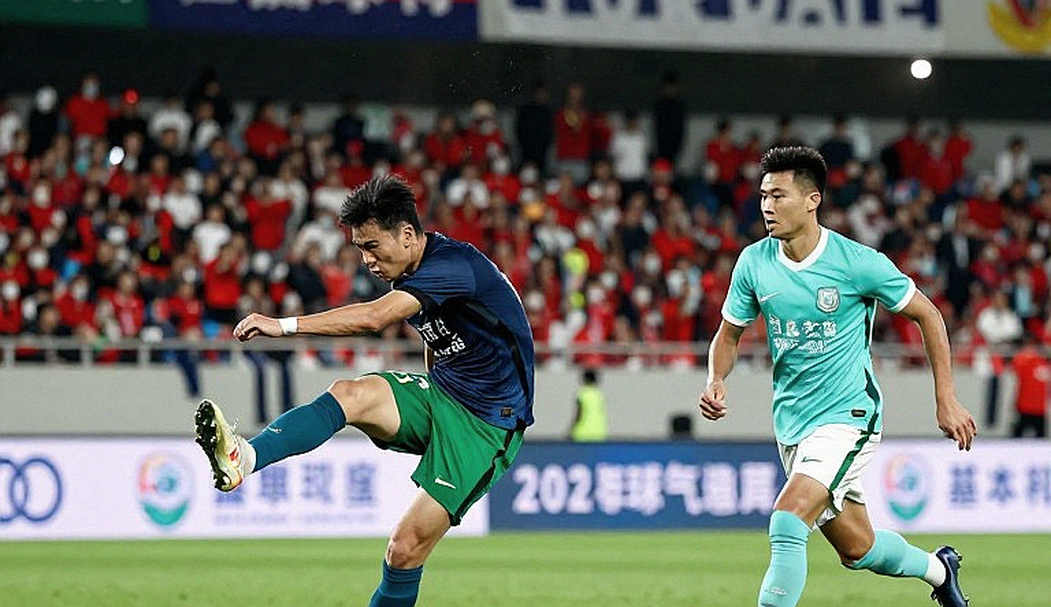
First half. Beckham Putra left the bench and jogged along the touchline behind the goal to warm up. From the stands, plastic bottles began to fall, a few rolling to the edge of the goalmouth. A familiar Jakmania chant was rewritten, aimed straight at Persib's young player. A few metres away, a group of supporters pulled down the perimeter fence meant to separate the stands from the playing area. Beckham Putra did not turn around. He continued his warm-up routine with an almost indifferent expression while stewards and Jakmania field coordinators rushed in to intervene.
That night, on the pitch, Ivan Mamut scored in the 90th plus fifth minute to seal a 2-1 win for Persija over Persib. But the fastest-spreading image in Indonesia after the final whistle came from outside the pitch: bottles scattered behind the goal line, and a fence pulled down by the very people sitting behind it.
The match took place on 12 September 2026 at Stadion Utama Gelora Bung Karno (SUGBK), Jakarta, in Week 2 of the BRI Super League 2026/27. Persija hosted Persib, a fixture Indonesian media calls El Clasico Indonesia, the commercial and emotional centrepiece of the domestic calendar. Placing a derby of that weight in Week 2 is itself a scheduling choice worth noting, since leagues usually push marquee derbies toward the middle or back end of a season to maximise tension. Its early appearance points to a broadcast-window or stadium-availability decision rather than a sporting rhythm.
One day later, on 13 September 2026, Greg Nwokolo spoke. A former Persija striker, a figure Jakmania treats as an internal icon, he appealed publicly for an end to projectile throwing and to the lowering of barriers. The statement was released via the Instagram account of PRFM News.
Based on my experience covering matches across Southeast Asia, I have seen supporter sanctions follow many derbies. The structure of the SUGBK incident is different in one respect that makes it a serious test case for the league operator.
Three acts, three tiers, one system
The separation must be made immediately: the SUGBK incident contains three acts of different character, and each has its own enforcement path.
Throwing plastic bottles toward the warm-up zone is an individual behavioural violation. This type is usually handled with a fine on the host club plus individual stadium bans where perpetrators are identified.
Rewriting chants to target a named player sits in a grey zone. Depending on the altered content, it can be classified as incitement or as discriminatory abuse. Those two classifications carry very different sanctions, and the classification step depends on audio footage, steward reports, and how the match commissioner describes the incident.
Lowering the perimeter fence belongs to a third category, and it is the most serious. It is a structural safety failure, not a behavioural one. A fence pulled down means the physical separation between stands and playing area was neutralised by crowd force, while that crowd remained under the nominal control of the venue operator and of an organised supporter group.
At the European stadiums I have observed directly, the warm-up zone is classified as a controlled area. Stewards are layered, inner and outer rings, and the operating principle is explicit: any object that crosses the outer ring is recorded as an organiser failure, not a supporter failure. That allocation of responsibility sounds counterintuitive, but it is the foundation of every modern stadium safety system. When responsibility sits with operations, operations is forced to redesign the perimeter.
At SUGBK, both layers were breached: objects reached the warm-up zone and the barrier structure was pulled down. That is why this incident is difficult to close with a symbolic sanction.
The decision mechanism and its timeline
The Indonesian process runs on two parallel tracks. The match commissioner's report is typically filed within 24 to 48 hours of the final whistle, and that is the trigger for formal proceedings. Authority is then split between the PSSI Disciplinary Commission, the league operator PT Liga Indonesia Baru, and the SUGBK venue operator. This multi-agency structure usually produces slower but more comprehensive outcomes than a single-issuer case.
Following the historical disciplinary rhythm of Indonesian football, the cycle from incident to formal decision typically runs four to eight weeks. With the 12 September 2026 date, October 2026 is the window to watch.
Three scenarios are plausible. Mildest: a fine plus a warning on record. Central, and in my view most likely: a substantial fine, a mandatory safety-enhancement plan from Persija, and a partial stand closure for an upcoming home fixture. Harshest: a broad stand closure, individual bans on identified perpetrators, and, in an accumulating-offence case, the theoretical option of a points deduction. A points deduction in Week 2 is unlikely, but it exists in the sanction framework, which makes it part of the negotiating pressure.
One point deserves emphasis: the lowered-fence detail is the technical hinge of the entire file. A bottle-throwing case alone usually ends in a fine. A bottle-throwing case combined with a lowered barrier raises the question of stadium structure, and a question about structure cannot be answered with money.
What sits behind the incident
This derby is the highest-value fixture in Indonesian football in both broadcast and matchday terms, measured by audience scale and coverage. Any measure that reduces capacity at this fixture creates revenue damage disproportionate to an administrative fine. That is why the financial story here is not the fine, but the closure option.
There is another layer: the league's title sponsor appears on every perimeter board. When images of bottles and a fallen barrier circulate alongside the league's name, brand risk migrates from the club to the whole system. In Southeast Asian markets, sponsor reactions tend to be quiet, but they surface in renewal meetings.
On the player side, the pressure on Beckham Putra is identity-driven, not performance-driven. He is targeted because he is a Persib star standing in hostile territory, not because he played badly. That distinction matters: identity pressure does not disappear after one match, it accumulates with each return visit. If he sustains that composure across several away fixtures, it becomes commercially valuable data for a young player's personal brand.
On the other side, Greg Nwokolo spoke with an irreplaceable advantage. He belonged to Persija, he received the affection of the very stand that caused the incident. An appeal from inside the identity group carries a different weight from a rebuke issued by Persib. This is the kind of informal governance signal that tends to appear before PSSI rules: when a figure respected by the stand publicly demands correction, pressure on the offending faction eases, and an organised supporter group can self-regulate before it is regulated.
One more dimension is international. AFC club licensing criteria include stadium safety and disciplinary records. A single incident creates no immediate consequence, but a repeating pattern at the same venue starts appearing in assessment files. Indonesia is pursuing hosting ambitions and international image, so stadium-safety data carries value beyond one season.
The blind spot in how this is being read
The pitch never reads the textbook, and neither does this story.
The dominant framing is hostile fans versus a sympathetic young player. That framing travels easily, generates sympathy, and blurs the real question. Who configured the fence. Who inspected the perimeter before kickoff. Who allowed the warm-up zone to sit within physical reach of a standing section. When debate gets pulled toward victimhood, the sanction framework shifts from an operational question to an emotional one, and the sanction that finally lands is usually a light fine signed to close the story.
Tactics is first of all a system of questions, and here the correct tactical question sits at the 90th plus fifth minute. Ivan Mamut's goal is being presented as proof of Persija's mentality. A single data point of that kind cannot settle a late-game structural question. Either Persija pushed numbers forward late and generated pressure, or Persib lost concentration during stoppage time, or both happened at once. Southeast Asian derbies more often end from set pieces or direct play than from designed combinations. I have put myself in the position of being right about theory and wrong about reality often enough not to assign tactical meaning to a single moment.
Theory knows how to ask the question, but only the pitch knows how to answer. And the pitch at SUGBK on 12 September answered a question nobody in the organising structure wanted to hear.
What to track next
October 2026 is when the disciplinary file gets processed, and the severity there will show which direction the league wants its precedent to run. The next question belongs to SUGBK: whether the perimeter fence is re-inspected and reconfigured before Persib return, because that is the only test verifiable with the naked eye. As for Beckham Putra, the test lies in his next away fixture: whether that indifference is durable composure or just a single night's reaction. Indonesian football has a habit of forgetting after two rounds, and this time forgetting will cost more than usual.

Cầu thủ liên quan
Bài đề xuất
No analysis content available to construct an article2026-09-10
Football Analysis With No Data: Why 'Insufficient Information' Is an Honest Editorial Decision2026-09-09
Ajax sign Yves Bissouma on a free: a deal to mid-2027 and Tottenham's €30m write-down2026-09-15
The Empty Data Problem in Football Analysis: When Machines Face the Limits of Information2026-09-14
Bài đề xuất
Fenerbahce: Mason Greenwood and Matteo Guendouzi Subject of UEFA Investigation Following Lyon Clash2026-09-04
Gabriel escapes red card: Is VAR ruining the rules, or are we misunderstanding them?2026-09-08
Football Analysis With No Data: Why 'Insufficient Information' Is an Honest Editorial Decision2026-09-09
Academy Archaeology: From Dusty Training Grounds to the Spotlight – The Journey to Unearth Vietnam's Rough Diamonds2026-09-04
Manchester United determined to regain Champions League status as they host Sabah2026-09-11